






Trump's Self-Made Escalation Trap
〈노동자 연대〉 구독


The US war on Iran is back to square one. The US has been conducting airstrikes on Iran for ten days, while Iran has blockaded the Strait of Hormuz by firing at ships that do not use its designated sea lanes. Both sides declared that the memorandum of understanding (MOU) to end the war is “over” and that they are “officially withdrawing’ from it.
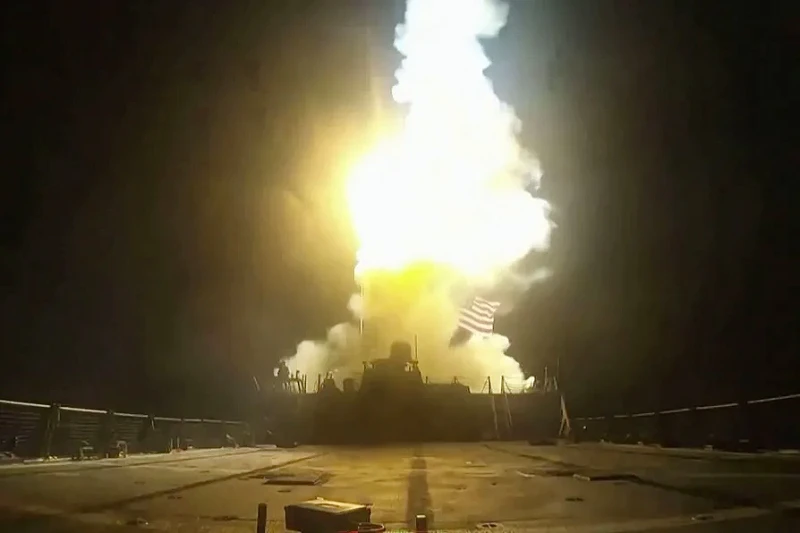
Since the US resumed its airstrikes on June 27, more than 50 Iranians have been killed and 517 injured (numbers are from the Iranian Ministry of Health’s July 20 announcement).
The US military has also suffered significant damage and casualties. Two troops were killed and one went missing after Iranian missiles struck a US military base in Jordan on July 17. A considerable number of Black Hawk helicopters were also damaged. In northern Iraq, one US soldier was killed during a controlled detonation of an Iranian drone.
The official US military death toll in the Iran war currently stands at 17, which remains relatively low. It is lower than the 19 casualties during the 1983 invasion of Grenada.
However, the US government is remaining silent on the number of wounded soldiers (while saying the death toll is “two or three”). Yet, dozens of US troops were injured in the Iranian attack on the Jordan base alone (The New York Times, July 19).
The air defense system of the US base in Jordan was breached by Iranian missile attacks three consecutive times on July 17 alone.
The Jordan base holds immense strategic importance for the US military. Ahead of the war with Iran, the US had relocated troops and assets previously deployed in Bahrain, Qatar and the UAE to Jordan and Israel, which were considered relatively safe.
By attacking this base, Iran demonstrated the speed and destructive power of its respond. “[Iran] not only retains a sufficient stockpile of missiles but has also grown more adept at evading US air defenses” (The New York Times, July 19).
The large-scale US military bases in the Gulf region were established for deterrence, rapid response and the securing of key routes for trade and energy. However, these very bases have now become targets for Iranian tracking and strikes. The size and permanence of the bases, once considered advantages, have turned them into predictable targets.
The US military death toll may rise as the US could be dragged into a larger war in the future. Furthermore, the Houthis in Yemen have threatened to block passage through the Bab-el-Mandeb Strait. With the Strait of Hormuz already choked off, the Houthis carrying out this threat could deal a critical blow to global shipping.
Arrogance
Trump’s greatest blunders in the Iran war are his incompetence, ignorance and arrogance. Trump barely considered the risk factors of the war ― especially the crucial importance of the Strait of Hormuz. He miscalculated that he could subjugate Iran in a single stroke, much like Venezuela. Now, Trump is looking for a way out of this difficult situation, but it remains a huge challenge.
The initial war objectives of regime change or halting Iran’s nuclear program have long vanished. The US war on Iran has become the “Hormuz War.”
The US does not want to hand over control of the Strait of Hormuz to Iran, thereby leaving room for hostile forces to close off this vital sea lane at any time in the future. Trump is trying to weaken Iran’s grip on the Strait of Hormuz by any means necessary.
However, Iran has no intention of relinquishing its control over the strait. Moreover, the Iranian leadership is brimming with confidence that they have practically won the war against the US. They have also revised their war objective from mere survival to defeating the US. The Iranian leadership believes that the best option to achieve this is to maintain the ability to control the Strait of Hormuz. Mohsen Rezaee, an advisor to Iran’s Supreme Leader, even stated that “this strategic passage [Hormuz Strait] is more important than dozens of nuclear bombs.”
Because of this, the US is waging a prolonged military operation with no clear exit strategy. It is expanding military operations, attacking civilian infrastructure and preparing for more extensive campaigns.
In retaliation against US airstrikes, Iran attacked Kuwait’s power generation and desalination facilities. While past Iranian airstrikes caused collateral damage to desalination plants, this time they were clearly and directly targeted. A new threshold of escalation has been crossed.
The question is whether US strategic objectives can be achieved through war. Professor Robert Pape of the University of Chicago noted (Substack, July 20):
“Can America reopen the Strait of Hormuz before the midterm elections? ... [E]verything now depends on the answer.
“[I]f Hormuz cannot be reopened within months, the United States will face a fundamentally different strategic problem. Every additional month raises pressure for larger military operations, increases the risk of wider regional escalation, prolongs economic disruption, and deepens political strains at home.”
Rather than acknowledging Iran’s control of the Strait of Hormuz, Trump appears to have chosen to resume a war that is unlikely to end in America’s favor. It remains to be seen whether the US will launch a large-scale ground war to break free from the limitations of relying solely on air power over the past few months. This is a politically perilous choice, as it could result in more US military deaths.
However, once political and military tipping points are crossed, the escalation of war develops its own strategic logic (the “escalation trap”). Initial military successes pressure leaders into feeling that they must resolve the situation with far greater force, dragging both sides further into an intensifying conflict that neither originally intended. Last week’s bombings suggest that the US has now entered that phase.
The world is not just facing a prolongation of the Iran war. It is plunging into yet another endless war.
