






A Weakened Iran and Palestinian Freedom
〈노동자 연대〉 구독


Before reading the this article, please read ‘Sending South Korean Troops is an Act of Complicity in the Oppression of Palestinians — Palestine Solidarity Supporters Must Also Oppose South Korean Troop Deployment.’
Why we must oppose the war on Iran without defending the Iranian regime
If the US and Israel win their war on Iran, the situation of the Palestinians will not improve. It will get worse. But among the arguments against sending South Korean troops, there is one that seems the least convincing: the claim that if Iran is weakened, the oppression of the Palestinians will get worse.
Against such an argument, the following objection is raised not only from supporters of the deployment but from within the Palestine solidarity movement as well: “The Iranian regime has only ever used the Palestinians. Its backing of proxy forces has brought the Palestinians not liberation but longer suffering. Why should the Palestinians be any worse off if such an Iran is broken?”
This objection needs to be looked at seriously, because part of it is true. But its conclusion is wrong. However harshly one criticises the Iranian regime, that alone cannot tell us what result this war will produce. We need to work out which parts of the objection are right and where it goes wrong.
The objections
Put as convincingly as possible, the objections come down to four.
First, for the Iranian regime, Palestinian liberation is not a goal it truly pursues but a tool it uses for its own ends. At home, it crushes workers’ strikes and kills women who protest against the forced wearing of the hijab. Abroad, it calls itself the “Axis of Resistance”. It uses the tragedy of the Palestinians to claim legitimacy for itself.
Second, Iran’s support for armed groups left the Palestinian struggle at the mercy of the rivalry between states for dominance in the region. After 7 October 2023, Israel was able to package the genocide in Gaza as a “war with Iran”, and the US and other Western governments gladly accepted that account. Because of the link to Iran, the objection goes, the Palestinian struggle came to be seen as less legitimate.
Third, when Gaza burned, Iran did not step in. The “Axis of Resistance” treated Hezbollah as expendable. In Syria it used its military might to crush a popular uprising. So what have the Palestinians gained thanks to Iran?
Fourth, the Arab regimes used “the Iranian threat” as a pretext for joining hands with Israel. If Iran is no longer a threat, those regimes lose their excuse for siding with Israel.
Of these four, the first three point to solid facts. We must acknowledge that the Iranian regime is cynical and hypocritical, and that it is no true friend of the Palestinians. But the key question we need to examine lies elsewhere.
The first error: mixing up two different claims
The first objection refutes the claim that “Iran is a good ally of the Palestinians”. But that is not why we oppose the Korean troop deployment. Our argument is that “if the US and Israel win their war on Iran, the Palestinians will be worse off”. These are two different claims.
Saying that Iran is no friend of the Palestinians, and saying that a war to subjugate Iran makes the Palestinians’ enemies stronger, can both be true at the same time. And in fact they are.
The objection tries to predict the outcome of the war from how bad the Iranian regime is. But the outcome of a war depends not on how moral a regime is, but on which side the war makes stronger and which side it makes weaker.
So one should ask a different question: if the US and Israel win this war, who gets stronger? Not the Iranian people. Not the Palestinians either. The ones who get stronger are Israel and the US. Pointing out that the Iranian regime is hypocritical does nothing to refute this simple fact.
The second error: blaming oppression on resistance
The claim that “Iran’s support for proxy forces has prolonged the Palestinians’ suffering” rests on an unspoken assumption: that without armed resistance, or without Iranian support, Israeli oppression would have been reduced. But the historical record shows this assumption to be false.
In the 1990s and 2000s, after the Oslo Accords, the so-called Palestinian Authority carried out “security cooperation” with Israel and suppressed armed resistance. Yet in that same period, the number of settlers in the West Bank more than doubled. Israel bombed Gaza in 2008, 2012 and 2014.
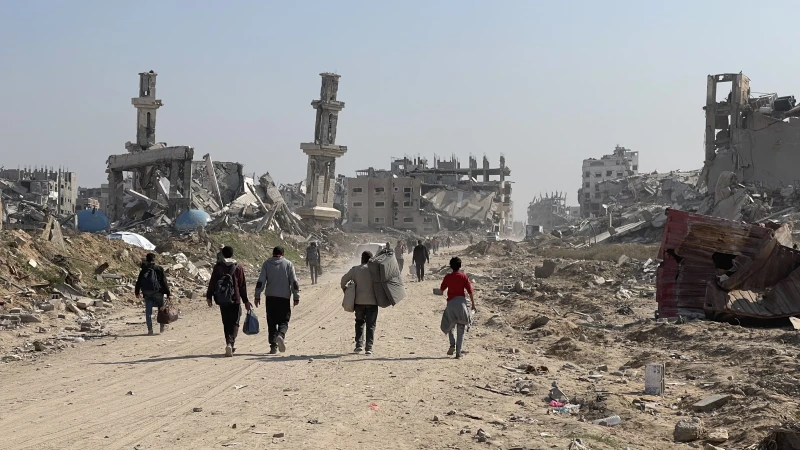
Israel seeks to eliminate the Palestinians and push them off that land not because Iran exists, but because the Palestinians exist on that land. Zionist settler colonialism aims to drive out the Palestinians and take their land. That project continues whether the Palestinians resist or not. Without resistance, it simply proceeds more quietly.
It is true that Israel packaged the genocide in Gaza as a “war with Iran”. But we must not focus so much on the pretext that we forget the oppression actually taking place. Had there been no Iran, Israel would have found another pretext. Indeed, before this it invoked the “war on terror”, and before that, “national security”. To think that oppression will disappear if you remove the reasons the oppressor gives for it is to put far too much faith in the oppressor’s words.
The third error: overlooking a result that is already plain to see
This debate is not simply a matter of guessing what will happen in the future. Over the past two years we have actually watched what happens when Iran’s regional influence weakens.
In the autumn of 2024 Israel wiped out Hezbollah’s leadership and laid waste to southern Lebanon. That winter, in the vacuum left by the collapse of the Assad regime in Syria, the supply line between Iran and Hezbollah was cut.
If the objection were right, the Palestinians’ situation should have improved in this period. In reality the opposite happened. Israel pushed deeper into Syrian territory. In the West Bank, annexation measures aimed at turning that land into Israeli territory were pushed forward faster. In Gaza, starving the population was used as a weapon of war.
Israeli politicians spoke openly of “redrawing the Middle East”. As the forces that had held Israel in check weakened, Israel acted with fewer restraints. It became freer to oppress the Palestinians as it pleased.
This is not about predicting the future; it is what we have seen from looking at what has already happened. To expect the Palestinians to be better off once Iran is completely defeated is to ignore the experience of the past two years.
The fourth error: expecting the Arab regimes to switch sides once “the Iranian threat” is gone
It is true that the Arab regimes cited Iran as their reason for joining hands with Israel. But the Iranian threat is only a pretext. The idea that the Arab regimes will take the Palestinians’ side once that pretext disappears is wrong.
The real reason the Gulf monarchies joined hands with Israel is not Iran but the US. These monarchies depend on the US to guarantee their security, and the US demands that they normalise relations with Israel. If Iran is gone, that demand does not weaken. It grows stronger, because the Arab regimes lose one more excuse for resisting what the US asks of them.
If Iran is defeated, the triangular alliance of the US, Israel and the Gulf monarchies will become even more entrenched in the region. In the order that alliance rules over, there is no place for the Palestinians. Its blueprint already includes treating Gaza as a real-estate development site and plans to “relocate” the Palestinians to other countries.
So does this mean defending the Iranian regime?
No. And this is precisely the heart of the debate. The aforementioned objection tries to brand those who oppose the Korean troop deployment as “apologists for Iran”. Among opponents of the deployment there are indeed some who defend the Iranian regime. But that is no reason to accept the labelling of all opponents of the deployment as “apologists for Iran”.
The Iranian regime is the enemy of the Iranian people. Nor is it a friend of the Palestinians. But if the US and Israel force the Iranian regime to its knees, or bring it down, through bombing and war, the result will not be democracy in Iran. It will be a catastrophe like the one that unfolded in Iraq.
Those who supported the invasion of Iraq in 2003 also started from the fact that “Saddam Hussein is a dictator”. That statement itself was a fact. But it was wrong to conclude from that fact that “the invasion is good for the Iraqi people”. The objection being raised today repeats the same mistake. From the fact that “the Iranian regime uses the Palestinians”, it draws the conclusion that “a war to break Iran is not bad for the Palestinians”.
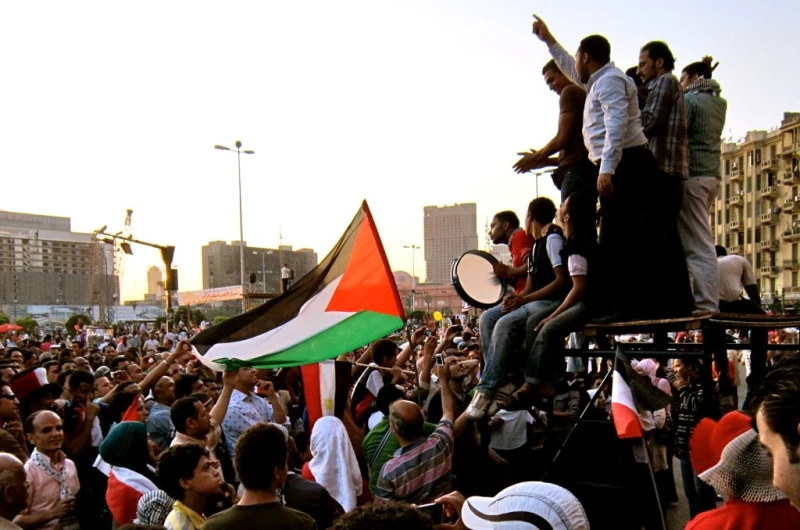
The Palestinians’ true allies are not the Iranian regime. Their true allies are the Egyptian youth and working masses who filled the squares in 2011, the young people of Iraq and Lebanon who filled the streets in 2019, and the Iranian women who took to the streets demanding the freedom not to wear the hijab.
The Iranian regime feared and repressed every one of these struggles. The US and Israel feared them just the same. When ordinary people rise up, the repressive regimes of this region and the imperialist powers stand on the same side.
So to oppose the Iranian regime while also opposing the war on Iran is not a contradiction. It is the only consistent position that opposes both the repressive regime and the imperialist powers.
Conclusion
There is a debate over the claim that if Iran is weakened, the oppression of the Palestinians will get worse. But saying there is a debate is not the same as saying the claim is wrong. Those who doubt it point to the Iranian regime’s hypocrisy. But the fact that the Iranian regime is hypocritical does not change what the war will do.
What Israel does when the forces holding it in check are weakened has already been shown over the past two years. This result, confirmed in practice in Lebanon and Syria, does not change however one judges the Iranian regime.
The Palestine solidarity movement has no need to stick up for the Iranian regime. But it must not look the other way when an imperialist war bombs that regime, simply because the regime is loathsome. That would not help the Palestinians; it would help those who oppress them. So the conclusion that we must oppose the deployment of South Korean troops does not change either.
