






Lecture by Jewish historian and professor at the Edinburgh College:
Zionism: From Its Origins to the Present
〈노동자 연대〉 구독


The following is a transcript of a lecture and subsequent Q&A session by Donny Gluckstein at a forum hosted by ‘People in Solidarity with Palestinians’ (hereafter ‘PSP’) on September 19. Donny Gluckstein is a British Jewish historian and an anti-war and anti-fascist activist who recently co-authored The Radical Jewish Tradition:Revolutionaries, Resistance Fighters and Firebrands.
We would like to thank PSP for granting us permission to publish this lecture as an article. A video of the lecture can be viewed on the PSP website.
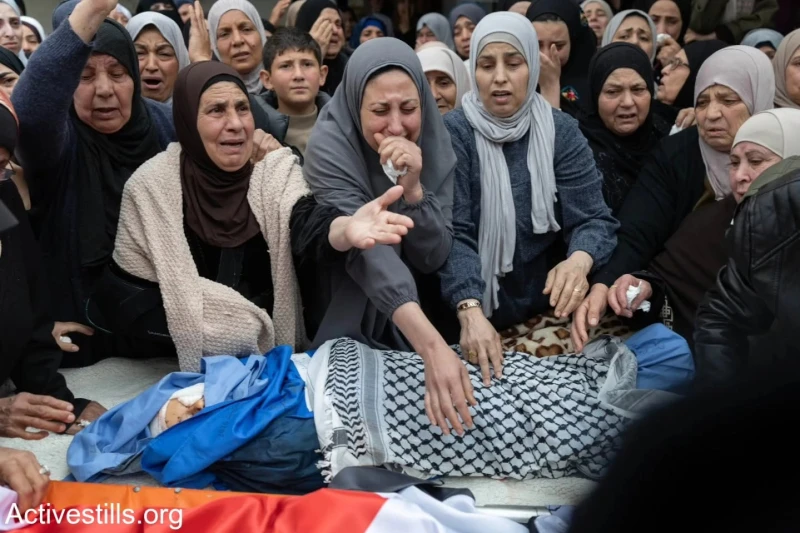
Thank you for having me. All right I’m going to start with two contrasting pictures.
We have as you heard just now from our introducer a live stream genocide taking place in Gaza settler violence in the West Bank and this is carried out by Israel a state that calls itself the Jewish state. And at the same time we had for centuries the oppression of Jews in Europe and this culminated in the horror of the Holocaust which killed six million Jewish people alongside many other people gays, Roma—gypsies—all sorts of people like that.
So how can we understand both of these things at the same time?
And to do that I’m going to look at four aspects.
The history of Zionism in Europe, the formation of Israel and the Nakba, the relationship of Israel to imperialism, and the situation today.
How did Zionism grow from a marginal movement into a dominant force?
So let’s begin with the 20th century. At that time there were 16 million Jews in the world. 11 million lived in Europe. Half of the Jews in Europe lived in the Russian empire but they were only 4 percent of the Russian population. Most of them were poor and most of them lived in towns and would become the new working class.
Russia was industrializing and the whole Tsarist system was in a huge social crisis and because of that the ruling class needed to divide and rule the population.
And in 1881 the tsar Nicholas the 2nd was assassinated by an anarchist and the Jews were blamed. This led to wave after wave of pogroms, violent riots against Jewish people. This meant that Jews in Russia were exploited as workers and oppressed as Jews. This was a very explosive combination.
In 1897 three different currents formed in the same year. One was Marxism and here Jews joined with non Jews to overthrow the system. Another current was the Jewish Labour Bund. And here Jews formed their own organization but worked with non Jews again to overthrow the system.
Imperialist support, endless war and rightward shift
And then we come to the third example, Zionism. And this Zionism said Jews can only escape oppression by going to Palestine. Zionism came at a time of imperialism. It copied the British, German, French and Japanese nationalism of the time.
But the national movements usually need to have a territory and a population to represent. Zionism didn’t have a territory and very few supported. Most of the workers supported Marxism or the Bund.
So Theodor Herzl, the person who developed Zionism, turns to imperialist rulers to try and win Palestine for him. He turns to the Sultan who rules over Palestine. He turns to the Tsar who carried out the pogroms. He turns to the Kaiser to the Pope, and eventually to British imperialism.
But Zionism was very very weak. To give you a sense of this, because of the pogroms 4 million Jews left Europe but only one in 27 went to Palestine which is where the Zionists said you had to go. Marxism and Bundism were far more popular than Zionism, and this led to left Zionism which dominated until the 1970s. So while the Zionists were appealing to imperialism, they had at the same time to sound radical because most Jews were radical.
So Zionism worked with imperialism to get Palestine, but at the same time presented a left face to the radical Jewish population.
The Zionism was unpopular but that changed after 1933 when Hitler came to power. The basis of Marxism and Bundism was solidarity between Jews and non Jews, because Jews were a minority of the population and could only succeed in working together with others.
But that belief in solidarity was shaken by what happened after Hitler came to power. All the countries in the world closed their doors to Jewish refugees because these were seen as radical agitators.
This did not change when the Holocaust happened after 1941. The allies did absolutely nothing to help Jews. They would not divert any resources from fighting the Germans, and they watched as 6 million people died just like they watched as Gaza happens now.
That meant that Zionism which had been a minority belief became the belief of the vast majority of Jews.
The establishment of the State of Israel and the Nakba
This takes us to the second element of my talk: the formation of Israel and the Nakba.
So the minority of Jews who did come to Palestine because of their repression, what did they do when they got there? Most of them came from Europe from the towns of Europe, and they had trades such as tailoring, making clothes these sorts of things.
But the society they arrived in Palestine was mainly an agricultural society and the people who arrived had no experience of agriculture. They were used to European living standards.
The Arab farmers, fellahin, had small farms and worked part time on other people’s farms. People providing work took the cheapest and the cheapest were the Arab workers. So the mass of Jewish immigrants cannot compete and they set up a separate economy of their own.
And this was similar to the South African Apartheid system. The best known example of that is the kibbutz. It was led by socialist Zionists. It sounded very left. It had no private property. It looked very progressive in many ways.
But it was a minority of settlers and it had a very simple slogan: no Arab labor. They would smash up Arab stores in the market. They refuse to employ Arabs. All of this.
And then at the end of the First World War, Britain becomes the ruler of Palestine. It wins it from the Ottoman Empire. And the policy of Britain was summed up in the Balfour Declaration. And the declaration says that Jews can have a homeland in Palestine.
And the British policy, the same old policy it pursued everywhere, was divide and rule, play off Jews against Arabs.
The Arab majority welcomes the refugees. At first there had been centuries of Jewish-Arab coexistence. Very few numbers of Jews, but they had coexisted perfectly well with the Arabs.
But the way that the settlers behaved with the apartheid system with taking over strategic parts of the land with the kibbutz changed this. If Zionism had really been socialist there would have been solidarity between poor Jews and poor Arabs against the common enemy the landowners and the British imperialists.
So it became clear that the people arriving were not refugees anymore. When they arrived they became settler colonialists. And Arab resistance began.
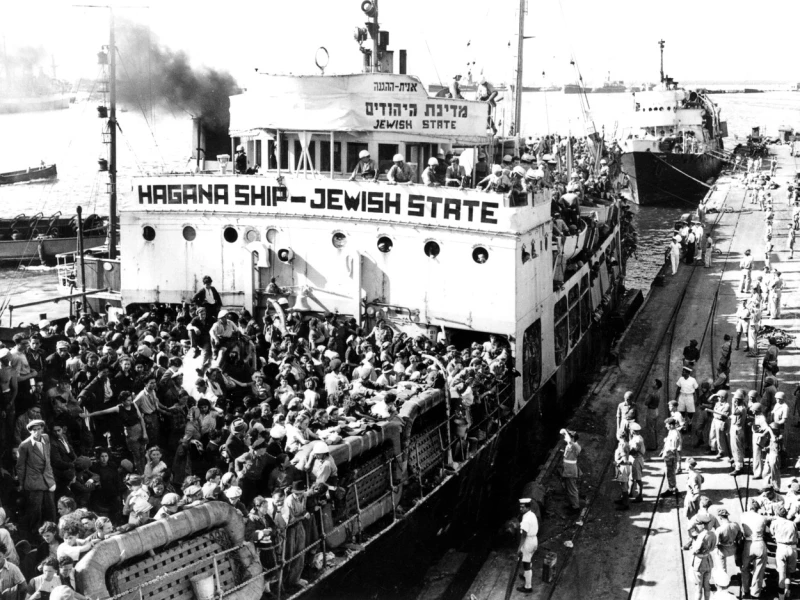
The Zionists built up an armed force, and ironically the armed force, the Haganah, was set up by an anarchist woman who had to leave Russia because she was planning to blow up the Tsar.
In 1936 there was a huge Arab strike against what was happening. The British and the Zionists combined to break it. The Zionists worked with the British to crush the Arabs.
But at the end of the Second World War when British imperialism was exhausted they turned on. The British were trying still to play off Arabs against Jews, and so were restricting the immigration of Jews in terms of numbers.
So in a famous event Menachem Begin, who was a member of the Stern gang, blew up the King David Hotel. The Stern gang modeled itself on Mussolini and his methods.
And this brings us to 1948 and the so called war of Independence. It wasn’t a war of Independence. There were 700,000 Arabs in Palestine by this time, 500,000 Jews.
The Zionists were able to carry out the Nakba for two reasons.
The first was their links with imperialism. They received arms, effectively from Russia via Czechoslovakia. So Czech arms were their main supply.
This was because both West and Eastern Europe, the two sides of the Cold War, were interested in controlling the Middle East.
But the other reason that the Nakba happened was because the Arab rulers were more interested in developing and defending their own interests than in helping fellow Arabs. So they had a weak response to Israel and the Nakba took place.
So to sum up the situation, after 1948 Israel was established by settler colonialism, by apartheid, and by ethnic cleansing.
But Israel was not the same as South Africa. It did not depend on Arab labor, on labor from the colonized. So most of the Palestinians were driven out from Palestine and became the biggest refugee population in the world.
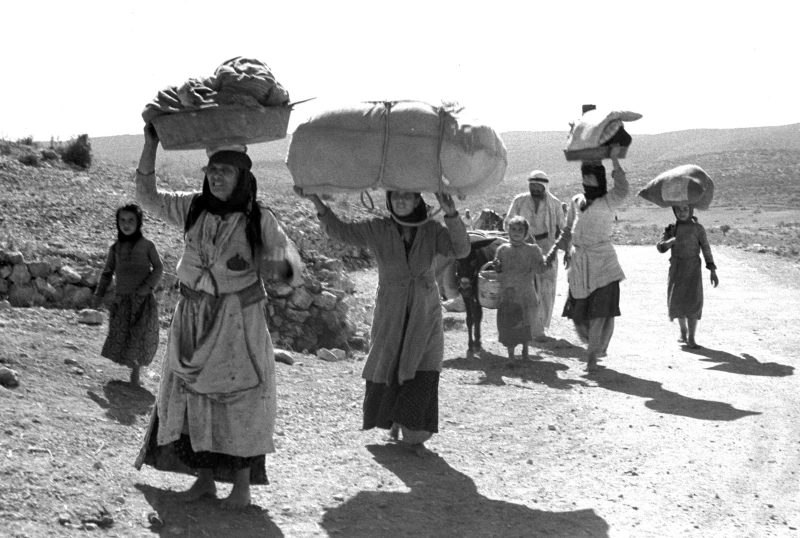
And this takes us to the third part of my talk: what happens after the establishment of Israel.
Israel was still weak. It was not yet the sub-imperialism it is today. To gain strength it needs to perform for imperialism, needs to appeal to imperialism from outside.
So for example in 1952 it made a deal with the Germans that meant that the Germans could say: we have put the Holocaust behind us, though Israel became the cover for ex-Nazis to be in the German administration.
And today Germany is the second largest supplier of arms to Israel.
In 1956 Israel invaded Suez for the British and French empires. It failed but in 1967 came an important turning point, the Six Day War. In this war several Arab armies were comprehensively defeated.
And now we see Israel moving into becoming a sub-imperialism. It expands into Gaza and the West Bank and dominates the Middle East.
Now the biggest imperialism in the world is its major supporter. For one obvious reason to control the oil rich zone of the Middle East. And this produces a shift in Israeli politics too.
Israel can only exist by oppressing the Palestinians and this means the Israeli public identifies with its military power.
And this produces a move to the right in Israeli politics. Labour Zionism loses from 1970 onwards, and Likud under Menachem Begin, the terrorist, takes over.
And we are into the period of permanent wars. In 1973 there’s the Yom Kippur War. After 1979, the fall of the Shah, Israel becomes even more important as the key imperialist base in the Middle East. We have then the Lebanon war which started in 1982 and more or less continues until today. We have operations against Gaza which started in 2008 and continue to today.
During this time the Israeli population is still growing with people coming in.
But it’s a thoroughly racist society. So, for example, you have white Europeans at the top of this society. You have what’s known as the Mizrahi Jews, Jews from Arab countries as a lower class. There are the Black Jews, the Falashas from Ethiopia below them. And one million Palestinians at the very bottom.
Israel does not represent Jewish culture. It represents a new imperialist culture. And the example is the language question. For example the Jews who died in the Holocaust mostly spoke a language called Yiddish. But in Israel you weren’t allowed to speak Yiddish or Arab, or Ethiopian. You had to speak a new language called Hebrew.
So we have increasing militarism, increasing right wing tendencies, but the Palestinian problem will not go away.
So the Israeli population is increasingly pro-imperialist, pro-genocide, pro-attacking Iran, all the terrible things you can imagine.
And the most right wing sections that support Ben Gvir and Smotrich are actually the poorest Israelis, the most exploited Israelis.
Wherein lies the prospect of Palestinian liberation?
I just want to quickly move on to the Palestine movement today. What are the options for it? It’s oppressed, but it has very little leverage unlike the ANC in South Africa.
The prospects there is no hope coming from the working class in Israel itself. It is a supporter of genocide.
It will not get support from the Arab rulers who are only interested in their own power.
It will not get support from the so called international community of world’s ruling classes to bring a Two State solution.
So the Palestine movement needs to look to struggle from below. From the Arab working classes we saw this during the Arab Spring in 2010–11 when the Rafah crossing opened.
It can look to the majority of the world working class because opinion polls consistently show opposition to Zionism and to Israel and for Gaza and for Palestine.
Our governments will not support Palestine unless we put them under pressure to do so.
So I’ll just finish with one famous quote from Karl Liebknecht, the German revolutionary. He said during the First World War, when Germany was fighting Britain, France etc.: The enemy is at home.
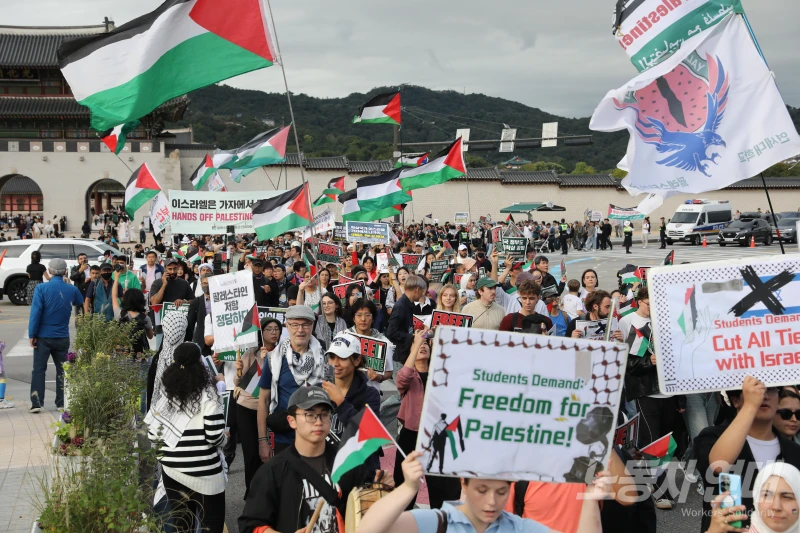
So for us to support Palestine we have to see that we have to fight our own ruling classes, to make the Palestine movement successful, to make sure that solidarity wins against the genocide, the ethnic cleansing and the apartheid system that we see today.
Replies to Floor Discussion
Thank you so much for all of those questions.
The first question was about how did Marxism and Bundism struggle? The Zionists said run away. What did Marxism and Bundism do? The Bund had a wonderful word, Doikayt.
And I don’t know how this translates into Korean but it means hereness.
What it meant was that you fought oppression where you were. You did not run away from racism, you fought back against it.
But because you’re a minority you can only do this with and together with the majority in other words with the working class around you.
So we’ll look at later the problems. But at the beginning the Marxists and the Bundists were together in the same revolutionary organization to overthrow Tsarism.
The next question was about the difference between right wing Zionism and left wing Zionism. The differences are very much at the surface. So it was the Labour Zionism that carried out the Nakba. It was Labour Zionism that carried out Suez and 1967.
After the right wing took over, probably the only difference is how you handle the Palestine question.
Do you deal with it through full genocide or do you try to find a middle solution which keeps the Arabs oppressed and outside their homeland but it is workable in a more moderate way.
The question about nationalism is an important one. All nationalisms say that what you have in common with the upper class and the working class, is more important than the class issue.
But right wing nationalism British, French, German, Japanese is about uniting to oppress.
But if you’re oppressed, nationalism of the oppressed is against imperialism. And as it was pointed out, this is the politics of the Palestine movement.
But the limits are that the Palestinians cannot win without the working class. In other words the Palestinian nationalism has its limitations.
We have to look at the Arab working class, at the world working class for the Palestinians to win.
Here I’ll come back to the question of Lenin and the Bund because that was asked, and it’s an interesting one.
At the beginning of the 20th century the Marxists and the Bundists were together.
But in 1903 they broke apart. And the Bundists said what’s more important to us is our Jewishness than our class, our working class identity.
And this led to a situation where in 1917 the Russian Revolution, which was the greatest moment of Jewish liberation, the Bund was outside it.
The Russian Revolution gave full equality to the Jews for the first time. The Bund split. Most of the Bundists left the Bund and joined the Communist Party and the Russian Revolution.
So that’s the problems, the limitations of nationalism. Even the most progressive nationalism.
I think we have a little bit of time to cover the question of the language.
First of all it’s worth pointing out that today 55 percent of Jews in the world live in Israel. So unfortunately Israel does have a sort of a large level of support even now.
But the language question shows you what it’s about. Hebrew was a dead language like Latin was in the Christian religion. It was a dead language. It was revived in the 1890s so that people would not speak the languages which they brought with them.
So it’s not just Yiddish that is suppressed, but Arabic and the culture of the Arab people who arrived in Israel.
In other words they were creating a new imperialist culture over the dead body of the old cultures that Jews had had for centuries.
To the question of what is Jewish which is an important question. This changes according to circumstances. There are assimilated Jews. There are religious Jews. There are secular Jews. There are left wing Jews. There are right wing Jews. And there is a struggle going on today between those different identities.
And I’ll finish with the last point that was made about the difference between the Diaspora Jewish population and the Israeli population.
So if you’re in Israel you live in a stolen house on stolen land. And you support the genocide.
If you live outside of Israel you can see much better what is actually going on in that area.
So there are some interesting statistics. The American Jewish population is the second largest outside Israel. Opinion polls show that American Jews are four times more likely to oppose Israel than the American population in general.
There’s a big age difference and the younger you are, the more likely you are to support the Palestinians.
In Germany, you are 125 times more likely to be prosecuted or challenged by the establishment if you’re Jewish than if you’re non Jewish.
So when I say the enemy is at home, it’s not just for people who are not Jewish. It’s also for people who are Jewish. We need to fight and to build a movement to support Palestine.
So the question is not whether you’re Jewish or not; the question is which side are you on.
